Client Portal
Cheyenne, Wyoming

Investment Property Loans in Cheyenne, WY

DSCR loans, plus fix and flip and ground-up construction financing, for investors buying or refinancing in Cheyenne and surrounding cities.

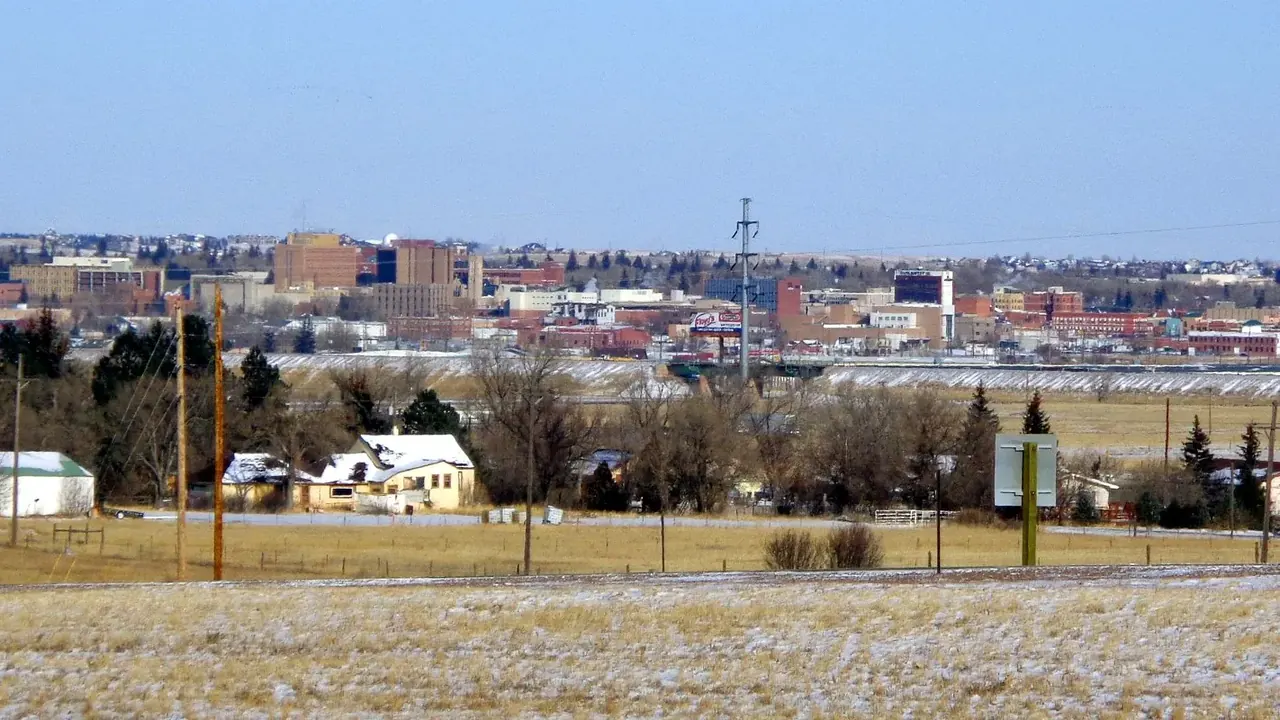
Cheyenne skyline

Photo: Vasiliymeshko, CC BY-SA 4.0, via Wikimedia Commons.

The Local Numbers

Cheyenne Rental Market at a Glance

$392,134
Typical home value
+3.5% over 12 months
$1,532/mo
Typical rent
+5.8% over 12 months
4.7%
Annual rent to value
Typical rent x 12, divided by typical value

Source: Zillow Home Value Index (mid-tier single-family and condo) and Zillow Observed Rent Index for Cheyenne, August 2026. Figures are market-wide typical values, not an appraisal or a quote.

Local Rules

Investing in Cheyenne: The Local Rules

Short-term rentals

  • Laramie County voters decide on November 3, 2026, whether to renew the county's 2% lodging tax on sleeping accommodations, a ballot list that names short-term condominiums alongside hotels, motels and campgrounds.

    For investors: The ballot wording reaches short-term condominiums and similar establishments, not only hotels, so an owner planning nightly stays in Cheyenne should check the November 3 result and confirm with the county whether the 2% applies before setting nightly rates.

    Source: Laramie County Clerk, Notice of Lodging Tax Election (dated September 28, 2026), Sep 2026

  • Cheyenne's development code treats a bed and breakfast as accessory to a home where the business owner lives, with no more than six guest rooms and guest stays capped at 14 consecutive days.

    For investors: The owner-residency rule closes this route to an absentee investor. Before counting on nightly income from a whole house in Cheyenne, ask Planning and Development in writing how that use is classified in the property's zone.

    Source: City of Cheyenne Unified Development Code, Sec. 5.7.9 and Sec. 1.4.3 definitions (full PDF), Oct 2026

Tax calendar

  • Laramie County's first-half property tax is payable by November 10 and the second half by May 10, and paying the whole year by December 31 avoids interest on the first installment.

    For investors: Bills go out by October 10, so a fall closing in Cheyenne should settle who pays the first half. Unpaid taxes turn delinquent on May 21, and the county advertises its tax sale each July, so missed bills escalate quickly.

    Source: Laramie County Treasurer, Property Tax Calendar, Oct 2026

Hazards and insurance

  • The City of Cheyenne cites its August 1, 1985 thunderstorm as its deadliest flood: record 24-hour rainfall, 12 deaths and $65 million in property damage along Dry Creek and Crow Creek.

    For investors: Cheyenne flooding comes from thunderstorms between late spring and early fall that pond streets and yards and back up sewers into basements. On any rental near Dry Creek or Crow Creek, ask about past basement water before pricing the purchase or the insurance.

    Source: City of Cheyenne Engineering, Floodplain Services, Oct 2026

Flood zones

  • Beyond FEMA's maps, Cheyenne regulates its own Special Flood Hazard Areas in seven urban drainage basins: Crow Creek, Dry Creek, Capitol, Holliday, East Lincolnway, Henderson and Clear Creek.

    For investors: Banks and insurers read FEMA's maps, which leave out these city-regulated areas, so a clean flood certificate does not settle the question. Ask Engineering Services whether the lot is affected before planning an addition, since building in a floodway is prohibited.

    Source: City of Cheyenne Engineering, Floodplain Map (based on the January 17, 2007 FIRM), Oct 2026

  • FEMA's October 2026 list keeps the City of Cheyenne at Community Rating System Class 7, worth 15% off flood insurance, while Laramie County's own program is rated Class 8, worth 10%.

    For investors: The city says the 15% applies automatically to any NFIP policy at a Cheyenne address. A rental just outside city limits falls under the county rating instead, and its floodplain questions go to the County Planning Department rather than city engineers.

    Source: FEMA, CRS Eligible Communities, October 1, 2026 Effective Date, Oct 2026

ADUs and lot splits

  • Cheyenne allows one accessory dwelling unit per detached single-unit lot where the zone permits, capped at 40% of the main home or 1,200 square feet, though a basement apartment may fill the basement.

    For investors: ADUs are barred on lots with apartment buildings or attached and semi-attached homes, so this suits detached houses only. Budget one extra off-street parking space and a recorded Notice of ADU Regulations in Laramie County land records after the city approves.

    Source: City of Cheyenne Unified Development Code, Sec. 5.7.3 Accessory Dwelling Units, Oct 2026

  • Cheyenne's code amendment log lists Ordinance 4659, dated February 9, 2026, which removed the owner-occupancy requirement from the city's accessory dwelling unit rules.

    For investors: Until this change, the owner had to live on the lot to add a second unit. A detached Cheyenne rental can now carry an ADU where the zone allows one, adding a second rent roll on one parcel. Confirm the zone first.

    Source: City of Cheyenne Unified Development Code, Appendix K Amendments, Oct 2026

Utilities

  • Cheyenne's Board of Public Utilities maintains the water and sewer mains, while the owner owns and repairs the water service line past the curb stop and the sewer line from the main into the building.

    For investors: A sewer camera inspection is worth ordering on an older Cheyenne rental, since a failed lateral is the owner's bill. The utility also holds owners responsible for keeping meters from freezing, so a vacant unit in winter needs heat and regular checks.

    Source: Cheyenne Board of Public Utilities, Property Owner's Responsibility, Oct 2026

Permits and occupancy

  • Cheyenne sets building permit fees on the full project value, including materials and labor, and charges a separate plan review fee equal to 65% of the permit fee.

    For investors: A renovation budget for a Cheyenne rental should carry the permit fee plus that 65% review charge. Inspections are booked through the city's OpenGov portal, where certificates of completion and occupancy are also printed once the work passes.

    Source: City of Cheyenne Compliance Department, Building Permit Information, Oct 2026

What drives rental demand

Five-Year Trend

Cheyenne Home Values and Rents, Month by Month

Zillow typical values, Aug 2021 to Aug 2026. Tap a chart to read any month.

Typical home value $392,134 Aug 2026 +15.7% over 5 years
$333k $366k $399k 202120222023202420252026
Typical rent $1,532/mo Aug 2026 +29.4% over 5 years
$1,142 $1,358 $1,574 202120222023202420252026
DSCR Explorer

Would a typical Cheyenne rental cover its own payment?

Rent divided by the full monthly cost. Move the sliders.

1.00
estimated DSCR
Loan amount
Principal and interest
Taxes, insurance, dues
Total monthly cost
Estimated DSCR by loan-to-value
1.00
60%
1.00
65%
1.00
70%
1.00
75%
1.00
80%

Illustration only: 30-year amortizing payment, Zillow typical values (Aug 2026). Not an appraisal or a quote.

Beyond Single-Family

Small Multifamily Rentals in Cheyenne

Rental Housing by Building Size

Of 9,365 renter-occupied homes in Cheyenne:

  • 2 to 4 units3,160 (33.7%)
  • 5 to 9 units925 (9.9%)
  • 10 to 19 units667 (7.1%)

Median gross rent $1,035/mo · renters are 32% of households.

Source: U.S. Census Bureau, American Community Survey 5-year estimates (2019 to 2023), tables B25032, B25064 and B25003 for Cheyenne.

Investor Questions

Cheyenne Investor FAQ

When are property taxes due on a Cheyenne rental?

Laramie County's first half is payable by November 10 and the second half by May 10. Paying the whole year by December 31 avoids interest on the first half. Bills are mailed by October 10, and unpaid taxes become delinquent on May 21.

Source: laramiecountywy.gov

Can I add a second unit to a Cheyenne rental house?

Where the zone allows an ADU, yes. Ordinance 4659 in February 2026 removed the owner-occupancy rule for accessory dwelling units. One ADU is allowed per detached single-unit lot, up to 40% of the main home or 1,200 square feet, with one extra parking space.

Source: cheyennecity.org

Can a Cheyenne rental be in a flood area that FEMA's map does not show?

Yes. The city regulates its own Special Flood Hazard Areas in seven drainage basins, including Crow Creek, Dry Creek and Capitol, on top of FEMA's floodplains. Its deadliest flood, on August 1, 1985, killed 12 people.

Source: cheyennecity.org

Is there a lodging tax on short stays in Cheyenne?

Laramie County charges a 2% lodging tax on sleeping accommodations, including short-term condominiums, and voters decide on November 3, 2026, whether to renew it.

Source: laramiecountywy.gov

Wyoming

Wyoming Rules Investors Ask About

LiButti Capital

Get your personalized rate.

Tell us about the deal. No tax returns, and no credit pull to see where you stand.

📞 Call us now (650) 200-2304
8% complete · Loan type
⏱ About 30 seconds ✓ No credit pull to see your rate ✓ No tax returns — the property qualifies, not your paycheck

What kind of loan are you looking for?

Are you the investor, or a broker?

What are you looking to do?

Where are you in the purchase?

What type of property is it?

How will it be rented?

What's the monthly market rent?

Current or expected rent — a ballpark is fine.

Where's the property?

Start typing and pick from the suggestions.

Roughly, what are the numbers?

Ballpark is fine — this is what prices your rate.

Tell us about the project

Ballpark numbers are perfect.

Rentals you own plus flips or builds you have finished, 0 to 200.

What's your estimated credit score?

A ballpark is perfect — we do not pull your credit.

How much investing experience do you have?

✓ Based on what you shared, this looks like a deal we can price

Submit

Enter your details and an advisor calls you to walk through your rate and structure. Does that work for you?

✓ No credit pull to see your rate  ·  ✓ No tax returns  ·  ✓ Business-purpose only

⌂ LiButti Capital · NMLS #2682926 · Equal Housing Opportunity

Products shown are business-purpose investor loans (such as DSCR) secured by non-owner-occupied property. They are not consumer mortgages and are not intended for personal, family, or household use.

Estimates are based on the information you provide and assume it is accurate and complete. Actual terms depend on full underwriting, appraisal, title, and program eligibility and may differ. The rate shown is the note rate, not the APR; figures exclude taxes, insurance, and certain third-party costs. The payment shown is principal and interest, or interest only where an interest-only option was selected; interest-only payments do not reduce the loan balance and the payment increases when the interest-only period ends.

Compensation and fees vary by loan amount, program, and transaction and are finalized in your loan documents at closing. By submitting, you authorize LiButti Capital to contact you about your inquiry by phone, text, and email (which may be autodialed or prerecorded) and to obtain consumer/credit reports as needed; message and data rates may apply. See our Privacy Policy.

Coverage

States We Serve

DSCR loans in 40 states and Washington, D.C. Fix and flip, rehab, and ground-up construction in 40 states and Washington, D.C.

AL AK AZ AR CA CO CT DE DC FL GA HI ID IL IN IA KS KY LA ME MD MA MI MN MS MO MT NE NV NH NJ NM NY NC ND OH OK OR PA RI SC SD TN TX UT VT VA WA WV WI WY
DSCR And Rehab/Construction Not Currently Available